Yude
Mechanical
Yude
Mechanical
In the stone crushing industry, the jaw crusher plays an irreplaceable role. For sand and gravel plants, ensuring stable product particle size while improving overall capacity and reducing energy consumption and operating costs is a core issue in production management.
As primary crushing equipment, the operating status of the jaw crusher directly affects the efficiency of the entire crushing production line. This article will systematically analyze how jaw crushers help stone crushing plants significantly improve production efficiency from the aspects of working principle, key factors for efficiency improvement, practical cases, and solutions to common problems.
Jaw crushers are mainly used in the primary crushing stage of the stone crushing process, compressing large pieces of ore or stone into small to medium particle sizes suitable for subsequent secondary crushing.
● Brief Description of Working Principle
The jaw crusher gradually crushes large pieces of material through repeated squeezing and compression between the fixed jaw plate and the moving jaw plate. The motor drives the pulley and eccentric shaft, causing the moving jaw to periodically approach and move away from the fixed jaw, thus completing the continuous crushing process.
● The Importance of Primary Crushing
The efficiency of primary crushing directly determines the output and stability of the entire production line.
The more stable the crushed particle size, the higher the efficiency of downstream equipment (impact crusher, cone crusher, sand making machine);
Jaw crushers can stabilize the stone flow rate, improve crushing efficiency, and reduce the risk of blockage;
With its large crushing ratio and low operating cost, it is the preferred primary crushing equipment for most sand and gravel plants.
The output and operating efficiency of a jaw crusher are affected by a variety of factors, the following are the four most crucial aspects.
1. Feed Size and Uniformity
The feed determines the crushing quality and is the primary condition for improving efficiency.
Maintaining a stable feed: Using a vibrating feeder can achieve uniform feeding, avoiding output fluctuations caused by inconsistent material quantities.
Controlling the maximum feed size: Large materials exceeding the recommended particle size can easily lead to accelerated jaw plate wear or blockage.
Avoiding excessive mud content: Wet and sticky materials easily adhere to the crushing chamber walls, reducing crushing efficiency.
➡ Optimization Recommendations: Ensure stable feed and appropriate particle size, and pre-screen materials with high mud content.
2. Equipment Parameter Optimization
Adjusting equipment parameters can directly improve crushing capacity.
Discharge Opening Adjustment (CSS): A smaller discharge opening improves particle size control but reduces output; a larger discharge opening increases capacity. A balance should be struck based on demand.
Crushing Chamber Type Selection: A deep crushing chamber increases throughput and is more suitable for high-capacity requirements.
Moving Jaw Speed Optimization: A reasonable moving jaw motion trajectory improves crushing efficiency and reduces liner wear.
➡ Optimization Recommendations: Adjust the discharge opening and crushing chamber type according to material hardness, finished product requirements, and output targets.
3. Regular Maintenance and Upkeep
Scientific maintenance is key to maintaining long-term efficient equipment operation.
Lubrication System Inspection: Proper lubrication of bearings can significantly reduce energy consumption and component wear.
Wear Parts Inspection and Replacement: This includes jaw plates, guard plates, side liners, etc., which should be replaced promptly according to their wear level.
Fasteners Inspection: Regularly check frame bolts, grooved wheels, etc., for looseness to prevent downtime due to malfunctions.
➡ Optimization Suggestion: Establish a periodic maintenance mechanism to avoid production losses caused by sudden downtime.
4. Automation and Intelligent Control
Modern sand and gravel plants are further improving equipment efficiency and management levels through intelligent systems.
PLC centralized control enables:
Real-time monitoring of operating status
Automatic adjustment of feed rate
Fault alarms and protective shutdowns
Intelligent monitoring systems can record energy consumption data and production fluctuation trends, assisting in optimizing equipment parameters.
➡ Optimization Suggestion: Introducing an automation system can significantly improve production stability and safety.
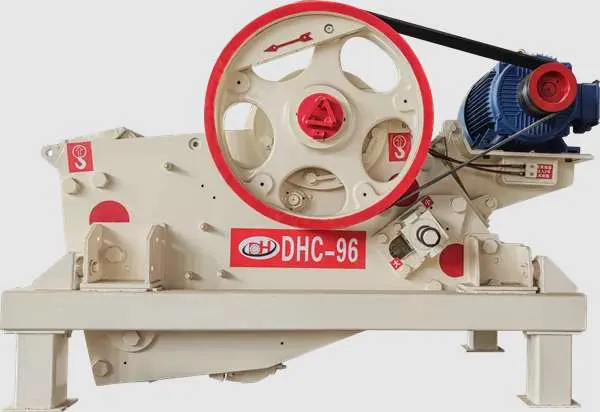
A sand and gravel production plant encountered problems such as declining output and increased energy consumption after one year of equipment operation. The plant optimized its jaw crusher by implementing the following measures:
Adjusting the discharge opening from 120 mm to 140 mm
Fine-tuning the moving jaw's movement speed
Establishing a maintenance plan of "weekly inspection and monthly maintenance"
Replacing severely worn jaw plates
Optimization Results:
Daily output increased by approximately 18%
Energy consumption decreased by approximately 12%
Downstream cone crusher blockage rate decreased by 40%
These data demonstrate that appropriately adjusting jaw crusher parameters and maintenance strategies can significantly improve overall production efficiency.
The following are the three most common problems encountered during jaw crusher operation and their corresponding strategies:
● Problem 1: Crushing Chamber Blockage
Solution:
Maintain a uniform and stable feed
Adjust the discharge port to a suitable size
Pre-screen or dry wet and sticky materials
Clean the crushing chamber regularly
● Problem 2: Output Fluctuations
Solution:
Check if the feeder is operating normally
Check the wear of the jaw plates and replace them promptly
Optimize the angle between the discharge port and the crushing chamber
Check if the motor and pulleys are operating normally
● Problem 3: High Energy Consumption
Solution:
Check the bearing lubrication
Replace severely worn jaw plates
Avoid overloading
Adjust the moving jaw trajectory to reduce ineffective crushing actions
As the core primary crushing equipment in a stone crushing plant, the operating efficiency of the jaw crusher directly determines the capacity, energy consumption, and stability of the entire production line. Through rational feed management, scientific parameter adjustment, standardized maintenance, and intelligent upgrades, sand and gravel plants can achieve significant efficiency improvements and cost reductions without substantial increases in investment.
If you are looking for a more efficient crushing production line solution, please contact our professional support.
Learn more about jaw crusher optimization solutions →
Get equipment tuning guidelines now to improve crushing plant efficiency →
Contact us for customized crushing production line suggestions →
Top 3 Jaw Crusher Mistakes That Kill Your Production Rate
2026-07-20 02:40How Often Should You Replace Jaw Plates for Maximum Uptime?
2026-07-13 02:40Achieve Consistent 1-Inch Minus with These Jaw Crusher Settings
2026-06-29 06:06The Secret to Lower Energy Bills in Jaw Crushing Operations
2026-06-22 02:40Address: Luoyang Luoxin Industrial Park, Henan,China
E-mail: sales@yd-crusher.com
Phone: 86-139-3993-0123
Yude
Mechanical
Create the greatest value for customers
Provide the best quality products and services
86-139-3993-0123
sales@yd-crusher.com
Luoyang Luoxin Industrial Park, Henan,China