Yude
Mechanical
Yude
Mechanical
Selecting the right jaw crusher for hard rock applications is one of the most critical decisions in any mining or aggregate operation. Hard rock—such as granite, basalt, or quartzite—places extreme stress on crushing components, demanding a machine that combines robust construction, optimized kinematics, and reliable performance. An unsuitable crusher leads to frequent downtime, excessive wear, and ultimately higher operating costs. This guide breaks down the essential factors you must evaluate to choose a jaw crusher that handles hard rock efficiently, with practical insights backed by engineering principles. By the end, you will have a clear framework to match your material and production requirements to the right machine, and understand why YUDE has become a trusted name in this demanding field.
Hard rock typically exhibits compressive strengths exceeding 200 MPa (29,000 psi). A jaw crusher designed for such material must withstand immense forces without structural failure. Key mechanical elements include:
When evaluating a crusher, review its structural components and confirm that the manufacturer uses finite element analysis (FEA) to optimize the frame design. YUDE, for example, employs FEA in all their jaw crusher models to ensure maximum fatigue life even under continuous hard rock service.
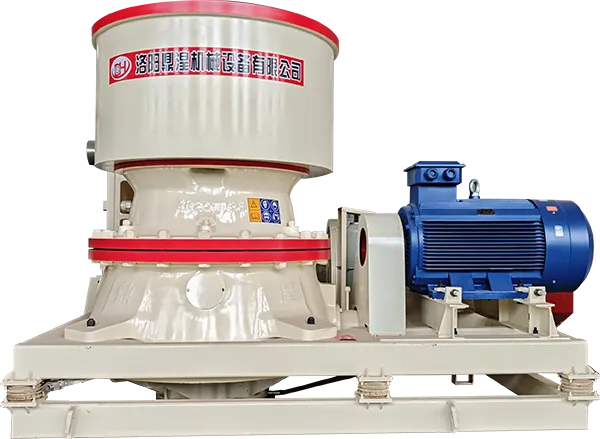
Not all jaw crushers are created equal. Below is a comparison of traditional versus modern designs that excel in hard rock applications:
| Feature | Traditional Jaw Crusher | Modern High-Efficiency Crusher (e.g., YUDE HD Series) |
|---|---|---|
| Chamber geometry | Straight or single-curved | Deep, multi-curved with optimized nip angle |
| Toggle plate adjustment | Manual shim plates | Hydraulic wedge adjustment (on-the-fly) |
| Jaw die design | Flat or straight | Chevron or corrugated profile for better grip |
| Eccentric shaft bearing | Spherical roller bearings | High-capacity cylindrical roller + spherical combination |
| Flywheel inertia | Standard | Increased inertia for hard rock momentum |
These differences directly impact throughput, product shape, and power consumption. For hard rock, the modern design reduces the nip angle to around 20–22 degrees, which prevents the rock from slipping upward during the crushing stroke. YUDE’s HD series, for instance, achieves a nip angle of 21 degrees, enabling a 15–20% higher capacity over conventional models when processing granite.
Hard rock crushing demands high torque at low speed. A crusher with a premium electric motor (6-pole, 1000 rpm) and a robust V-belt transmission provides the necessary breakage force. Check the motor power rating relative to the feed opening: for a 40x60 inch machine, at least 200 HP is recommended. YUDE offers customized motor configurations based on your site’s voltage and frequency, ensuring optimal energy transfer.
Efficiency is not just about throughput—it is about achieving the desired product gradation with minimal recirculation. When selecting a jaw crusher for hard rock, three parameters are paramount:
Use manufacturer capacity charts as a starting point, but remember that actual performance depends on rock friability, moisture content, and feed distribution. YUDE provides a detailed application questionnaire to simulate your specific conditions, helping you select the right model—from their compact PE series to the heavy-duty PEX and HD series.
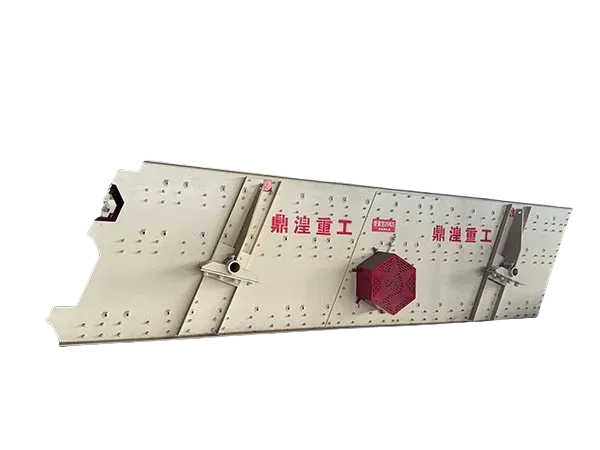
A jaw crusher is a long-term investment. Hard rock accelerates wear on jaw dies, cheek plates, and toggle seats. Therefore, select a machine with:
Moreover, consider the crusher’s weight and foundation requirements. Heavier machines generally indicate more steel and higher stability, but also impact transport and installation costs. YUDE designs their crushers with modular sub-assemblies to simplify on-site assembly, and their engineering team provides layout drawings and foundation recommendations at no extra charge.
Even the best crusher requires expert commissioning and ongoing support. When you choose YUDE, you get access to a team of crushing experts with over 10 years of field experience. They offer on-site training, remote diagnostics, and a comprehensive warranty that covers structural components for 3 years. This level of support directly translates to higher uptime—often exceeding 97% in hard rock installations according to YUDE’s customer feedback.
Choosing a jaw crusher that handles hard rock efficiently hinges on understanding the mechanical demands, evaluating modern design features, matching capacity and product size, and prioritizing long-term reliability. By focusing on chamber geometry, drive system, adjustability, and after-sales support, you can avoid costly mistakes and achieve consistent production. Contact YUDE—a trusted manufacturer with proven success in granite, basalt, and quartzite crushing—to discuss your specific needs. Their engineers will help you specify the exact model, recommend auxiliary equipment (feeder, scalper, discharge conveyor), and provide a turnkey solution that maximizes your return on investment.
Top 3 Jaw Crusher Mistakes That Kill Your Production Rate
2026-07-20 02:40How Often Should You Replace Jaw Plates for Maximum Uptime?
2026-07-13 02:40Achieve Consistent 1-Inch Minus with These Jaw Crusher Settings
2026-06-29 06:06The Secret to Lower Energy Bills in Jaw Crushing Operations
2026-06-22 02:40Address: Luoyang Luoxin Industrial Park, Henan,China
E-mail: sales@yd-crusher.com
Phone: 86-139-3993-0123
Yude
Mechanical
Create the greatest value for customers
Provide the best quality products and services
86-139-3993-0123
sales@yd-crusher.com
Luoyang Luoxin Industrial Park, Henan,China