Yude
Mechanical
Yude
Mechanical
For aggregate producers, achieving a consistent 1-inch minus product from a jaw crusher can be the difference between a profitable shift and costly rework. The 1-inch minus fraction—material that passes through a 1-inch square screen—is a critical specification for road base, concrete aggregates, and many construction applications. However, inconsistency in crusher output leads to increased recirculating loads, higher wear costs, and off-spec material that requires additional processing. The key lies in understanding and precisely adjusting a few critical crusher settings. In this guide, we draw on YUDE’s decade of experience in crushing solutions to walk you through the exact adjustments needed to produce a uniform 1-inch minus product, shift after shift.
One-inch minus material typically refers to aggregate that passes a 1-inch screen, often with a maximum top size of 1 inch and a fines content that can vary depending on the application. For road base, a consistent gradation ensures proper compaction and load-bearing strength. For concrete, it affects workability and strength uniformity. When your jaw crusher produces a mix where some rocks are oversize (plus 1 inch) and others are too fine, you face two problems: (1) you must screen out the oversize and recrush it, increasing circulating load; (2) excessive fines can lead to binder issues in asphalt or concrete. Consistent 1-inch minus means not only hitting the top size but also maintaining a stable particle shape and distribution.
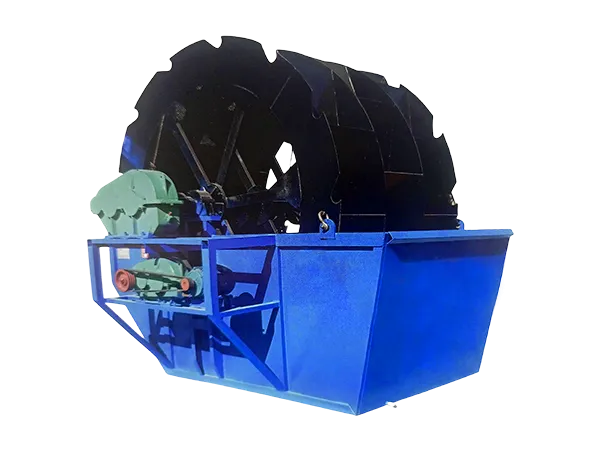
Achieving consistent output from a jaw crusher depends on three primary adjustable parameters: closed-side setting (CSS), crusher speed (RPM), and feed characteristics. Each interacts with the others, so systematic adjustment is essential.
The CSS is the minimum distance between the fixed and moving jaw plates at the bottom of the crushing chamber. It directly determines the top size of the product. For 1-inch minus, you typically want a CSS of approximately 0.8 to 1.0 inch (20–25 mm). However, due to jaw plate wear and the angle of nip, the actual setting that yields 1-inch minus may need fine-tuning. Start with a CSS of 1.0 inch and test screen the output. If you see excessive plus-1-inch material, reduce the CSS in 1/8-inch increments until you achieve 95% passing 1 inch. If you get too many fines, open the CSS slightly. Always use a reliable indicator or feeler gauge to measure CSS under load, as static measurements can differ by up to 10%.
The speed of the eccentric shaft (RPM) influences the number of crushing cycles per minute. Higher RPM generally increases throughput but can lead to more flaky particles and reduced consistency if the material doesn’t have time to fall through the chamber. For 1-inch minus production, a moderate RPM in the range of 250–300 is typical for most jaw crushers. If you are getting too many elongated pieces, reducing RPM by 10–20 can allow particles to reorient and break more cubically. Conversely, if throughput is insufficient, increasing RPM slightly may help without sacrificing too much shape. Monitor the product shape after any RPM change; a consistent cubical product is essential for minus material.
Even with perfect CSS and RPM, inconsistent feed can ruin product consistency. For 1-inch minus, the feed should have a top size no larger than 3–4 times the CSS (about 3–4 inches). Feeding too many large boulders forces the crusher to choke, causing sudden load changes and inconsistent output. Also, moisture content above 4% can cause sticky buildup on jaw plates, reducing effective capacity and altering product size. Implement a scalping screen before the crusher to remove fines, and control moisture through stockpile drainage or blending. YUDE recommends maintaining a homogenized feed with a maximum size of 6 inches for most primary jaw crusher setups.
Even with careful settings, you may encounter periods of inconsistency. Here are the most common issues and their fixes:
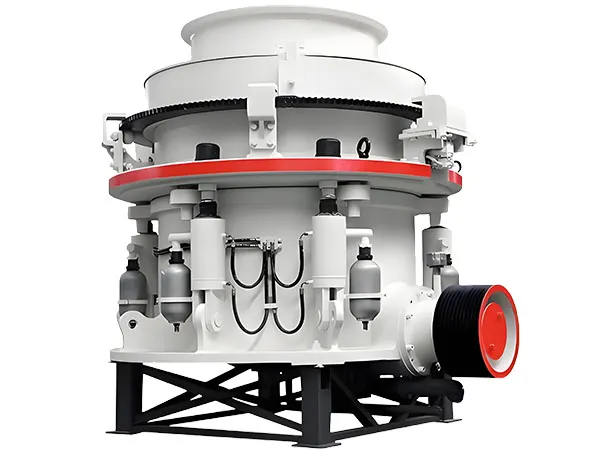
Consistency doesn’t come from settings alone; it requires regular calibration and preventive maintenance. YUDE recommends a weekly calibration routine that includes checking CSS under load, inspecting jaw profile wear, and verifying belt tension. Our field engineers have developed a simple procedure:
YUDE crushers are designed with easy-adjust toggle mechanisms and wear-resistant jaw profiles that maintain setting consistency longer than industry averages. Our patented curved jaw geometry promotes a more uniform crushing action, reducing the need for frequent re-setting. With YUDE equipment, many operators report maintaining consistent 1-inch minus for over 1,500 hours between adjustments.
Achieving consistent 1-inch minus from a jaw crusher is a matter of precision in the three key settings—CSS, RPM, and feed control—combined with regular calibration and proactive maintenance. By systematically adjusting these variables and monitoring product quality with simple screen tests, you can eliminate costly recrushing and produce spec material directly. YUDE’s decades of field experience have shown that operators who invest time in setting up and maintaining their jaw crushers consistently outperform those who rely on guesswork. Implement the practices outlined above, and you will see immediate improvements in product consistency and crusher profitability.
Top 3 Jaw Crusher Mistakes That Kill Your Production Rate
2026-07-20 02:40How Often Should You Replace Jaw Plates for Maximum Uptime?
2026-07-13 02:40Achieve Consistent 1-Inch Minus with These Jaw Crusher Settings
2026-06-29 06:06The Secret to Lower Energy Bills in Jaw Crushing Operations
2026-06-22 02:40Address: Luoyang Luoxin Industrial Park, Henan,China
E-mail: sales@yd-crusher.com
Phone: 86-139-3993-0123
Yude
Mechanical
Create the greatest value for customers
Provide the best quality products and services
86-139-3993-0123
sales@yd-crusher.com
Luoyang Luoxin Industrial Park, Henan,China